

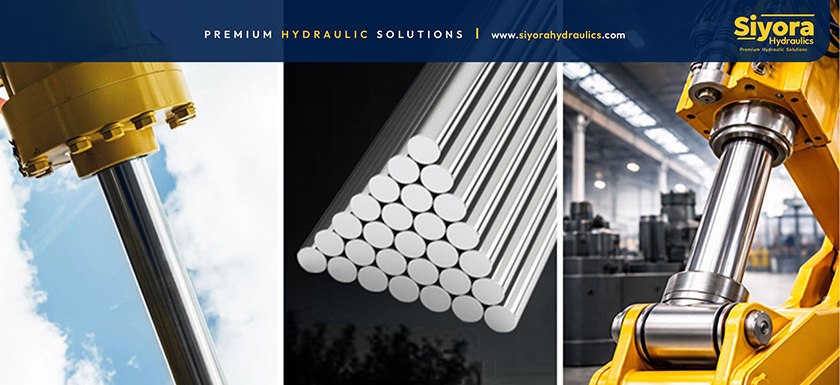
PISTON RODS IN HYDRAULIC SYSTEMS: WHY THEY ARE CRITICAL COMPONENTS.
A piston rod is a highly engineered, precision-machined steel bar used in hydraulic and pneumatic cylinders. It connects the internal piston to the external machine component, converting fluid pressure into linear mechanical motion. Piston rods are essential for transmitting force and ensuring controlled movement in industrial systems.
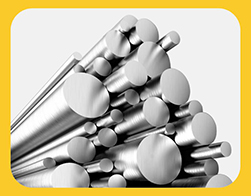
Piston rods are not just components—they are the backbone of hydraulic systems. Their ability to transfer force, maintain precision, and withstand harsh conditions makes them indispensable in modern industrial applications. Investing in high-quality piston rods ensures optimal performance, reliability, and long-term cost savings. Piston rods are fundamental components in hydraulic systems, directly impacting performance, durability, and efficiency. Their precision design, material strength, and surface quality make them indispensable across industries.
Their precision design, material strength, and surface quality make them indispensable across industries. Choosing the right piston rod not only enhances productivity but also ensures long-term reliability and cost-effectiveness.
WHAT IS A PISTON RODS?
A piston rod is a precision-engineered cylindrical component that connects the piston inside a hydraulic cylinder to the external machine part. It transfers the force generated by hydraulic pressure into linear motion, enabling heavy-duty industrial operations.
WHY PISTON RODS ARE CRITICAL IN HYDRAULIC SYSTEMS
• Power Transmission Backbone
Piston rods act as the primary link between hydraulic energy and mechanical work. Without them, the force generated inside the cylinder cannot be effectively transmitted to perform tasks like lifting, pushing, or pulling.
• High Load-Bearing Capability
These rods are designed to withstand extreme pressure, heavy loads, and continuous operation. Their strength ensures reliable performance in demanding environments such as construction, mining, and manufacturing.
• Precision and Smooth Operation
A high-quality piston rod ensures smooth and accurate motion. This precision is essential in applications where controlled movement is required, such as CNC machinery and automated systems.
• Wear Resistance and Durability
Piston rods are typically hard chrome plated to resist corrosion, abrasion, and wear. This extends their lifespan and reduces maintenance costs significantly.
• Sealing and Leakage Prevention
The surface finish of a piston rod directly affects sealing performance. A smooth, defect-free surface helps maintain proper sealing, preventing hydraulic fluid leakage and ensuring system efficiency.
• Corrosion Resistance
In harsh industrial environments, piston rods are exposed to moisture, chemicals, and dust. Protective coatings like chrome plating enhance resistance against corrosion and environmental damage.
TYPES OF PISTON RODS
• Hard Chrome Plated Piston Rods - Most commonly used type, coated with hard chrome for corrosion resistance.
• Induction Hardened Rods - Heat-treated rods offering high surface hardness and fatigue resistance.
• Stainless Steel Piston Rods - Ideal for corrosive environments like marine, chemical, and food industries.
• Nickel-Chrome Plated Rods - Provide additional protection in extreme working conditions.
MATERIAL IN USED
• Carbon Steel (C45, EN8) - General industrial use
• Alloy Steel (EN19) - High strength and durability
• Stainless Steel (304, 316) - Corrosion-resistant applications
KEY FEATURES OF PISTON RODS
• Anti-Bending Strength
Resists buckling under heavy loads.
• High Tensile Strength
Handles heavy loads and high pressure without deformation.
• Hard Chrome Plating
Provides wear resistance, hardness, and longer life.
• Wear & Abrasion Resistance
Minimizes surface damage and extends durability.
• Precision & Tight Tolerances
Ensures accurate fit and smooth operation.


Gurdeep Kaur
Apr 15, 2026 - at 11:24 am“Highly impressed with the quality of piston rods. Siyora Hydraulic Company maintains excellent surface finish and accuracy. Will continue working with them.”
Madan Roy
Apr 15, 2026 - at 1:36 pm“Excellent workmanship and material quality. Siyora Hydraulics Company delivers rods that meet expectations. Great value and performance. Will definitely reorder.”
Pawan Dwivedi
Apr 15, 2026 - at 3:50 pm“The piston rods are well-polished and durable. Siyora Hydraulics maintains consistent quality. Highly recommended for industrial use. The finish is flawless and enhances sealing performance. Great product.”